

A Guide to Plastic End Caps
Find out why these components are so important.
End caps are used as covers to protect against damage and contaminants on a range of applications. We've designed this guide to help you understand end caps and their uses, including:
At Essentra, we manufacture a range of plastic end cap products available in different sizes, materials and colours, such as red, yellow, blue, black and white, to suit your application.
Protecting pipes and tubes with end caps
Damage to pipes threaten safety, the environment and system reliability. When damaged, metal is vulnerable to corrosion from moisture and contaminants, or even extreme temperature changes. Corrosion is also a constant threat even when there is no impact. All it takes is for moisture and debris to enter the pipe.
End-cap protection is critical, fitting over the outside diameter of your pipe. But pipes aren’t the only applications that need capping. For example, exposed tubes, such as those on scaffolding, need end caps to protect the general public and workers. Tube end caps can prevent serious injuries. Tube caps for packaging are another common need – so are caps for end use. These are only some of the benefits of end caps.
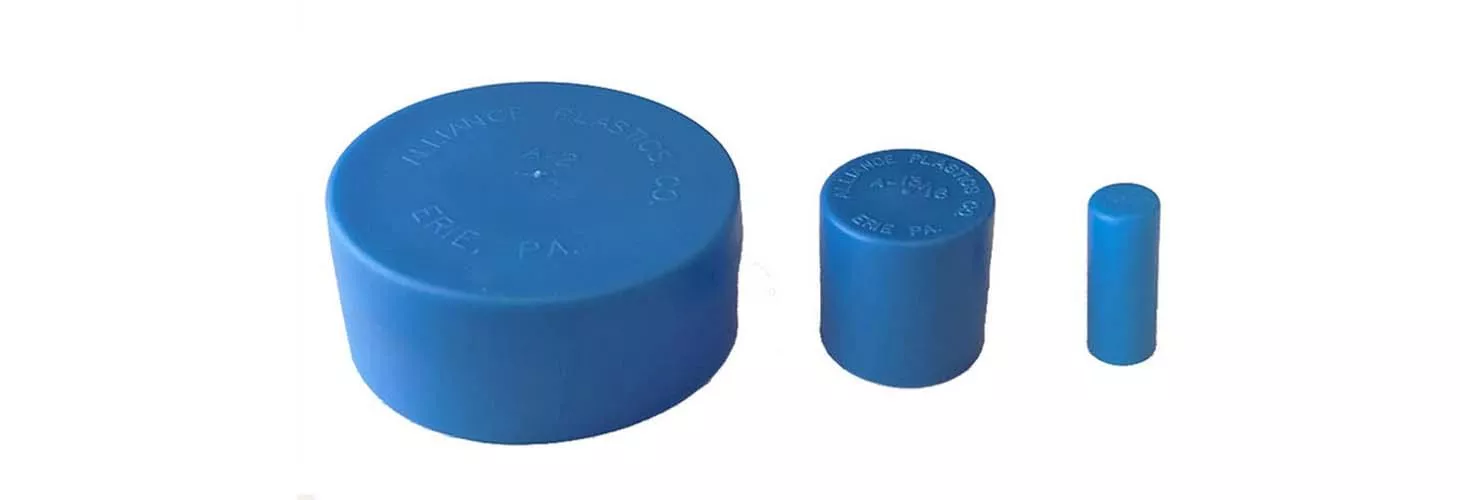
Other applications of the plastic end cap
Damage can also happen during manufacturing processes, specifically masking. High-temperature protective end caps prevent contamination to keep your application’s internal body clean. Plastic end caps are also needed to protect electrical connectors from dust and other contaminants. They’re used on rods – caps even have end uses, providing a finishing touch to furniture applications for a neat appearance.
Different shapes are also available, from round to square plastic caps. You can even find rectangular PVC caps.
Why plastics are ideal for end caps
Plastics are the ideal materials for end caps, no matter what the application. They come in a range of materials, from soft and flexible vinyls to impact-resistant LDPE. Threaded pipe caps and plugs are normally for heavier duty applications. Nylon end caps are available, but the material’s rigidity makes it ideal for threaded fittings that need long lasting or permanent protection.
Types of plastic end caps
Most end caps are push fit for both threaded and non-threaded applications.

Round pipe end caps also designed for tubes and rods
LDPE – durable, lightweight & 100% recyclable
Excellent protection for transport and storage
Maximum temperature: 79.4˚C (175˚F)
Use for: Protection during transportation and storage
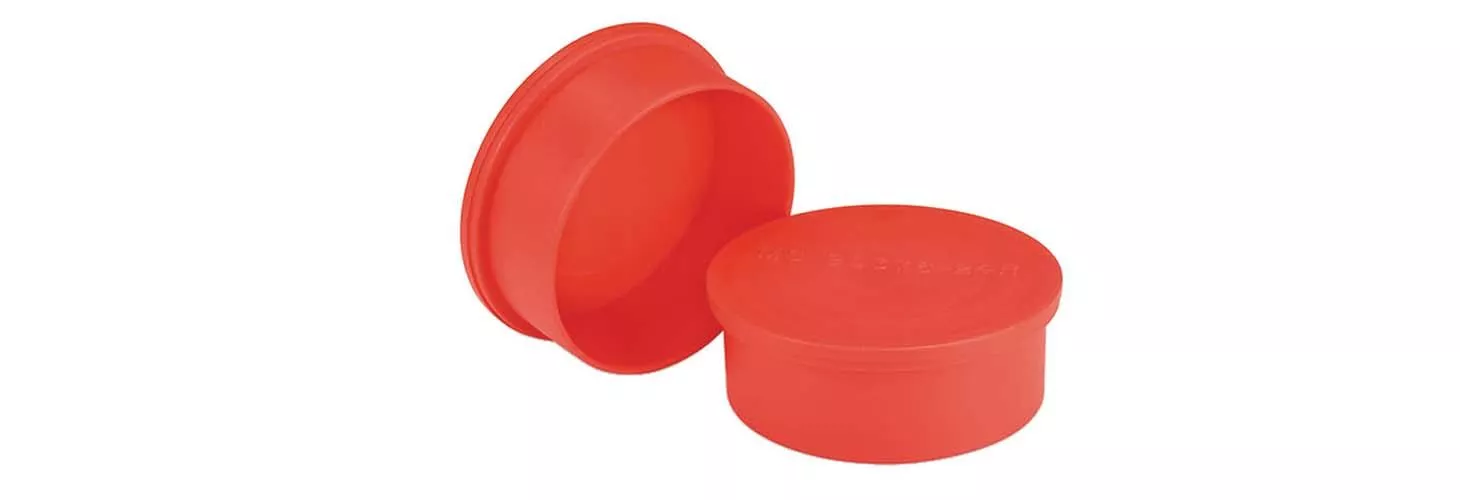
Cost-effective protection
Protects against dirt, dust, and moisture during transit and storage
LDPE
Use for: Circular connectors with standard threads

Protects threaded or non-threaded pipe ends
Resistant to cracking or splitting under normal use
Outstanding toughness and puncture-resistant
PE for good flexibility
Easy assembly and removal
Use for: Protection during transportation and storage

Flexible PVC can stretch on to larger dimensions for snug fit
No tearing, splitting or shredding
Airtight seal while also insulating and cushioning
Shock resistance – great for protection in transport
Maximum temperature: 176.7˚C (350˚F)
Use for: Fence posts and other end uses; all masking processes, except blasting

Protects driveshafts and the surrounding bearings from oil and chemicals
Available for ANSI/SAE, DIN748, IEC 600-72, and ISO R775 driveshafts
Impact-resistant LDPE
Use for: Protection during transportation and storage

Tapered cap & plugs – standard
Can be used as a cap or plug
Caps multiple outer diameters or plugs multiple inner diameters
Red or blue LDPE
Available with wide flange for added protection on bearing surfaces
Use for: Protection during transportation & storage

Plastic caps for tubing – packaging
Internal rib that provides a quick and tight fit on tube containers
LDPE
Use for: Packaging tube I.D.s with 1/4" through 1-3/4" with .045" wall thickness

PVC provides flexibility and snug fit
Glossy, attractive finish for decorative end use
Use for: Hanging packaging tubes or tools from a hook
Plastic end caps: sizing
A firm fit is paramount for end caps to ensure end caps don’t fall off, exposing your application to damage and ingress. If height is relevant, you want to measure the inside height of the area of your application that needs capping.
Depending on the type of end cap you plan on using, it’s the outside and inside diameters that you need to match to the manufacturer’s caps.

Let’s say you want to use a standard tapered cap. Follow these steps to get the dimensions you’ll need.

Step 1:
Measure the outside diameter of your application, end to end, as shown here.

Step 2:
Measure the distance between the inner lips, as shown here.

Note: If you’re using a flexible material such as PVC, you won’t need an exact measurement. PVC can stretch across multiple diameters. Still, it’s best to get the precise measurement so that you can estimate the leeway you have.
Our standard tapered end cap is made of LDPE, so you’ll want the exact inside and outside diameters. Once you have those, you can match your measurements with those on our website for that product. Measurements are available in both imperial and metric units.
Step 3:
Match your measurements online to those of our tapered caps. If you’re looking for say, 5/8" plastic end caps, you’ll find it listed in decimals: 0.625. Or, for example, 2 3/8" plastic pipe caps will be listed as 2.375 and a 1 3/4 plastic cap will appear as 1.75.
Below is a snippet of sizes available for these caps. We’ll stick with inches for this example, but it works the same for millimetres. Notice that sizes are listed within ranges. If your inside and outside diameters fall within a particular range, that’s the size you should use.
NEXT STEPS
Tell us what the component needs to do
Tell us about the application, environment, material, volume or supply requirements. We can help identify a standard product, useful guidance or a custom route.