

LDPE: PCR vs virgin plastic
Get to know the key differences and benefits.
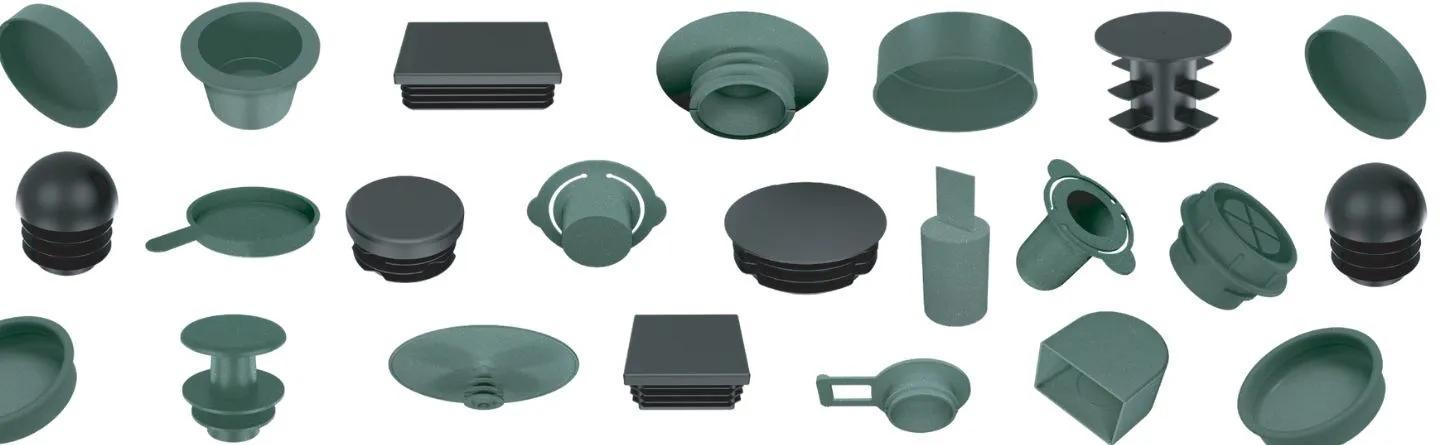
LDPE – low-density polyethylene – offers exceptional flexibility, toughness, and moisture resistance. Its pliability is ideal for caps and plugs to name one example, while its resistance to moisture protects packaged goods from humidity. But what’s the difference between recycled LDPE and LDPE as a virgin plastic? This guide explores the issues involved to help you make an educated choice – not just with LDPE, but plastics in general. We’ll cover:
What is LDPE PCR plastic?
Post-consumer recycled plastic – or PCR plastic – is sourced from products that have fulfilled their full life cycle. Post consumer plastics, such as bottles, containers, and other products, are collected, cleaned, processed into new plastic resins and then remade into new products.
Benefits
LDPE PCR plastics reduce the amount of plastic waste that ends up in landfills and the environment. They also lower our reliance on virgin plastics derived from fossil fuels. And less reliance on fossil fuels reduces the material’s carbon emissions and impact on the environment.
LDPE PCR plastic fits the circular economy’s three Rs: reduce, reuse, recycle. For any company trying to achieve sustainability goals, using PCR plastics makes sense.
That said, PCR plastics bring challenges in maintaining consistent quality and colour compared to virgin plastics, but the environmental benefits make it an important material in various industries, from packaging to consumer goods. Within our own range, 100% LDPE PCR materials come in green. You can also colour match with your brand. Our 98% PCR range allows for customisation while still giving you a high recycling content.
What is LDPE virgin plastic?
Virgin plastic refers to plastic resin derived directly from fossil fuels, such as crude oil. It’s the raw material used in the initial production of plastic products. The process involves extracting these fossil fuels, refining them, and then polymerising the resulting hydrocarbons into plastic polymers. These polymers are then formed into plastic resins, which serve as the base material for manufacturing plastic products. LDPE
Benefits
Virgin materials have not been previously processed or used, so their properties and quality are typically more consistent and predictable. When specific performance characteristics, such as clarity, strength, or purity, are crucial, virgin plastics have the edge.
Using virgin plastic material gives you precise control over the plastic's properties so that you can tailor the material to your exact requirements. This is particularly important for products that demand high performance, like medical devices, food packaging that requires specific barrier properties, and certain electronic components.
Does LDPE PCR plastic retain its characteristics?
In a word, yes. As a virgin material, LDPE offers:
Excellent chemical resistance
Long term weathering resistance
Excellent low-temperature flexibility & toughness
Excellent moisture barrier
100% recyclable
LDPE's characteristics are largely preserved in PCR plastic. This means there is no compromise on application suitability.
And while the recycling process might theoretically result in slight reductions in strength, it generally retains a good level of toughness.
Comparing the differences: PCR plastics vs virgin plastics
The key differences that we see between these materials – not just LDPE specifically – primarily revolve around their environmental impact and material properties:
| PCR plastics | Virgin plastics |
Material source | Made from plastic waste that consumers have already used and discarded | Derived directly from fossil fuels |
Environmental impact | Lower environmental impact by reducing reliance on fossil fuels, decreasing landfill waste, & lowering greenhouse gas emissions | High environmental impact due to fossil fuel extraction, greenhouse gas emissions, & contribution to plastic waste |
Energy consumption | Generally requires less energy to produce | Energy-intensive production process |
Material consistency | May exhibit variations in material properties, depending on the recycling process | Offers high purity, consistency, and predictable performance |
Quality & appearance | Can sometimes have slight colour variations, or other small imperfections due to the recycling process | Typically has a very clean and clear appearance |
Waste reduction | Reduces plastic waste by repurposing existing materials | Adds to the problem of increasing plastic waste |
Applications
Virgin plastic material is used in just about every industry in various applications. So let’s consider where PCR plastics are used and how.
Packaging: Containers and bottles for cleaning agents, personal care products, beverages, and pharmaceuticals
Automotive: Wheel arches, bumper brackets, underbody shields, battery casings, dashboards
Consumer electronics: TV frames, laptop enclosures, mobile phone casings, wearable devices
Manufacturing: Protective caps & plugs to cover openings in machinery, hydraulic lines, and pneumatic systems to prevent contamination. Also, end caps for metal fabrication, piping systems, and automotive parts protection.
Protection: Threaded & non-threaded caps to protect components from fluids and damage during storage and transit, fluids. PCR caps and plugs are also designed for metal fabrication finishing and pipe and flange protection
Try before you buy
Fee samples are available for our PCR products—just ask for yours. You can also download Free CADs. If you’re not quite sure if PCR plastic or virgin plastic is right for your application, our experts are always happy to advise you. Whatever your requirements, you can depend on fast dispatch.
Request free samples
Download free CADs
NEXT STEPS
Tell us what the component needs to do
Tell us about the application, environment, material, volume or supply requirements. We can help identify a standard product, useful guidance or a custom route.